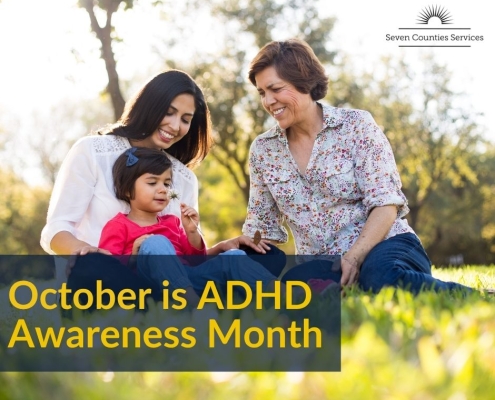
October is ADHD Awareness Month
Learn more about Attention-Deficit/Hyperactivity Disorder (ADHD) and support those who live with it every day
Many think ADHD simply means having trouble paying attention. The truth is that ADHD can affect many areas of life, including school, work, relationships, and daily routines. Understanding ADHD can help reduce stigma and encourage people to seek support when they need it.
What Is ADHD?
ADHD is a common condition that affects how the brain develops and functions. It can make it harder for someone to focus, stay organized, manage time, control impulses, or sit still for long periods. It can affect children, teens, and adults. While symptoms often begin in childhood, many people continue to experience challenges throughout their lives.
What Does ADHD Look Like?
ADHD does not look the same for everyone. Some people may have trouble paying attention, while others may be constantly moving or acting without thinking. Common signs of ADHD may include:
- Difficulty staying focused on tasks
- Frequently losing things
- Forgetting appointments or responsibilities
- Trouble following instructions
- Feeling restless or fidgety
- Interrupting conversations
- Difficulty managing time
- Becoming easily distracted
Why is ADHD Often Misunderstood?
Many people with ADHD hear comments like:
- “Just try harder.”
- “You’re being lazy.”
- “Everyone gets distracted.”
These statements can be hurtful and are often inaccurate.
ADHD is not caused by laziness, poor parenting, or a lack of effort. Many people with ADHD work extremely hard to stay organized, manage responsibilities, and meet expectations. Understanding this difference can help create more supportive families, schools, workplaces, and communities.
What Strengths Can Come With ADHD?
While ADHD can create challenges, many people also have strengths that deserve recognition. People with ADHD are often creative thinkers, problem solvers, energetic and enthusiastic, adaptable, curious, and innovative. Learning how to build on these strengths while managing challenges can help people thrive.
When Should Someone Seek Help?
If symptoms are making school, work, relationships, or daily life more difficult, it may be time to seek support that may include an evaluation by a healthcare professional, counseling, skill-building strategies, family education, and medication.
How Can Family and Friends Help?
If someone you care about has ADHD, your support can make a big difference. You can help by showing patience and understanding, offering reminders without judgment, celebrating successes, learning more about the disorder, and encouraging them to ask for help.
A little understanding can go a long way.
You Are Not Alone
During ADHD Awareness Month, let’s take time to learn more, challenge misconceptions, and support those living with ADHD. If you or a loved one is struggling with ADHD symptoms, Seven Counties Services can help. Our compassionate team connects people with the resources, treatment, and support they need to achieve their goals and improve their well-being.
Help is available and hope is always possible.
Call us at 502-589-1100 or schedule an appointment.
If you or someone you love is in immediate crisis, call, text, or chat 988, the 24/7 Crisis Lifeline.
Reviewed by Caitlin Macy, LPCC-S, unit manager III, Child & Family Services Downtown, on 9/30/2026.